Facing Rising Rates Without Answers?
We bring insights and solutions.
Are you facing yet another unsubstantiated increase to your health insurance plan? Are you tired of rate shopping and switching plans each year? Paying more and getting less? Were you advised that your claim and loss data are unavailable? Then it’s time to lean into AI and machine learning models.

How We Help

Understand Your Predictive Risk:
Unlock the full potential of your
risk assessment.

Data-Driven Recommendations:
We use this data to optimize your funding and plan selection.

Confidential and Secure:
Fully HIPAA compliant
and SOC 2 Certified.
Success Starts Here
Meet Borislow—we’re a talented team of trusted advisors who specialize in creative and innovative benefit planning solutions, dedicated to providing custom strategies to put you on the path to the benefits future your organization deserves.
Our SolutionsThe Power’s in the Partnership
We don’t just stop at planning—we’re in this together. Our formula for success is built on our relationship with you, providing you with:

Innovative Healthcare Financing Designs

Outstanding Employer & Member Experiences

Best In Class Approach for Talent Attraction
Your Vision is Our Mission
Your strategic vision has a design—we’re here to execute that together. Reach out to us today!

Solutions Scaled to Your Needs
When it comes to plans, we understand that one size doesn’t fit all. Your organization is unique, and you deserve the benefits that fit. And when it comes to options, the sky’s the limit with Borislow.
From fully insured to self-funded, wherever you are on the continuum, we’ve got the solution for you. With plan designs scaled to your needs, Borislow helps you find the right fit—then delivers it.
Fully-Insured
A fully insured health plan offers controlled, predictable costs with a consistent monthly premium. The carrier assumes all claim risk and provides a full suite of products and services designed to support member needs, with menu-style plan design options that comply with state mandates. Potential downsides include plan design rigidity, higher taxes, limited data, and challenging renewal negotiations.
Level Funded
For years, large employes have enjoyed the benefits of self-funded health plans, while small-to-mid size employers were left without options. Now that carriers are making self-funded options available to smaller employers, many are looking to level funded plans as a solution. The percentage of small employers offering level funded health plans has grown from 6% in 2018 to 35% in 2023.* Packaged and invoiced similarly to fully insured plans, level funded plans offer smaller groups the ability to enjoy the advantages of self-funded plans, allowing employers to participate in good claims experience while mitigating risk.
*According to the 2023 KFF Employer Health Benefits Survey
Captive Arrangement
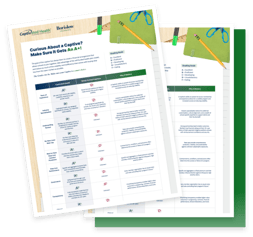
A captive arrangement allows like-minded employers to self-insure and then band together to reduce the volatility and inefficiency that comes with buying stand-alone stop loss from the open market. These employers then cede a large portion of their stop loss premium to a shared pool, allowing for increased cost transparency, plan control and an opportunity to keep healthcare costs lower and more consistent year over year. Catastrophic claims are absorbed by the captive, minimizing the financial risk, while modest claims allow employers to retain a portion of the profit they would otherwise transfer to a reinsurance carrier.
Self-Insured
Also known as a self-funded plan, a self-insured plan has the employer taking on most or all of the claim cost, in exchange for lower costs and greater savings. Self-insuring is an excellent option for growing or stable work forces looking for control over plan design, long-term cost management commitment, case management, and detailed claims reporting. A self-insured plan allows employer to participate directly in their claims experience. Self-insuring does come with more financial risk, particularly for small employers – but can be mitigated by the purchase of stop loss coverage. If purchased, stop-loss insurance will reimburse health claims that exceed a set amount. This coverage option can be used to cover catastrophic health claims on one covered person {known as specific coverage) or cover employee claims that significantly exceed the expected level for the group of covered persons {known as aggregate coverage). Any budgeted, but unused claim expenses result in direct savings to the employer’s bottom-line. Additionally, administrative expenses are often reduced in this arrangement and the employer retains complete control over plan design, allowing for greater flexibility and personalized employee benefits.
Get in Touch Today